1,022 uninsulated components · 460°C HP zone · Silica/Vermiculite + Rockwool core
Heat Rate improvement ≥ 10–30 kJ/kWh · protects PPA guarantee · payback 0.6 yr
Modular insulation upgrade for 1,022 thermal components at the Sur IPP HRSG area. Based on 8,400 operating hours per year and a net plant heat rate of 6,165 kJ/kWh (LHV).
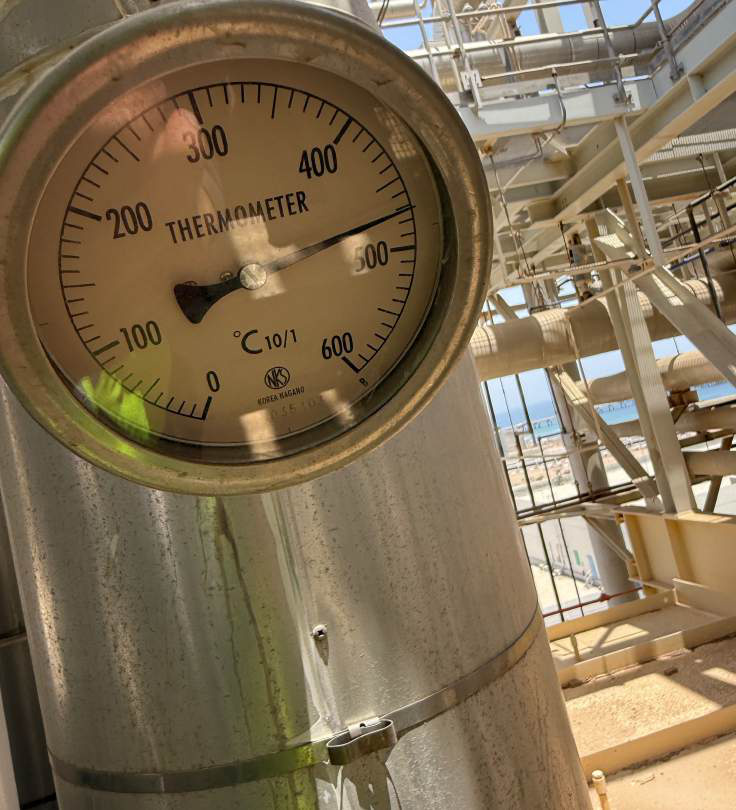
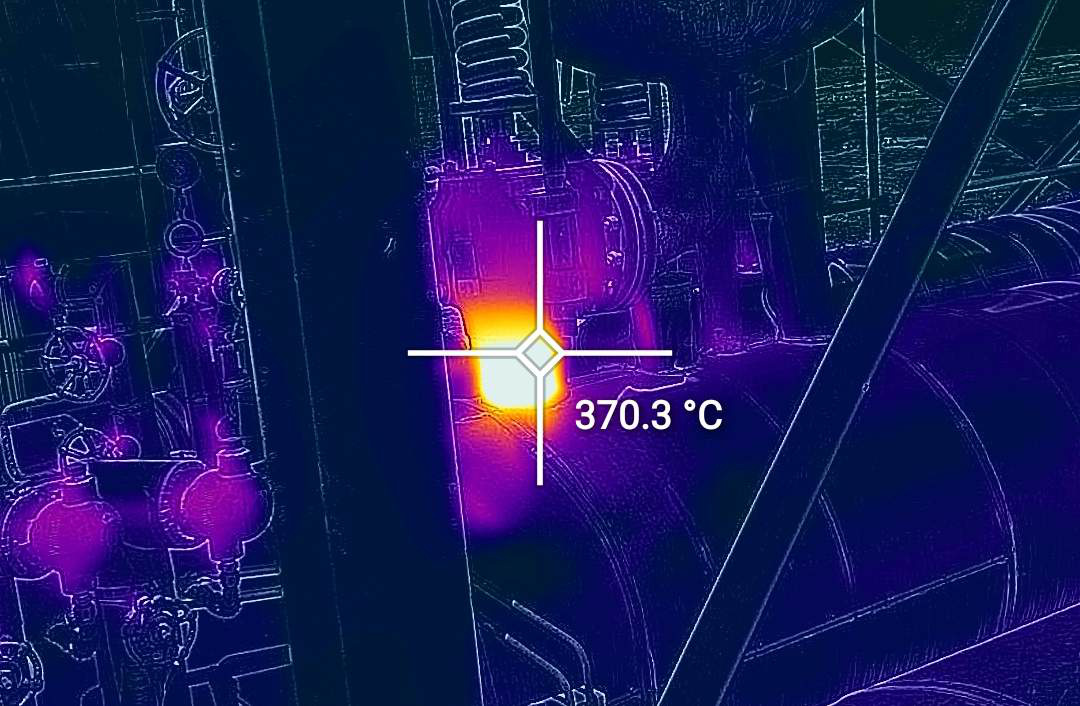
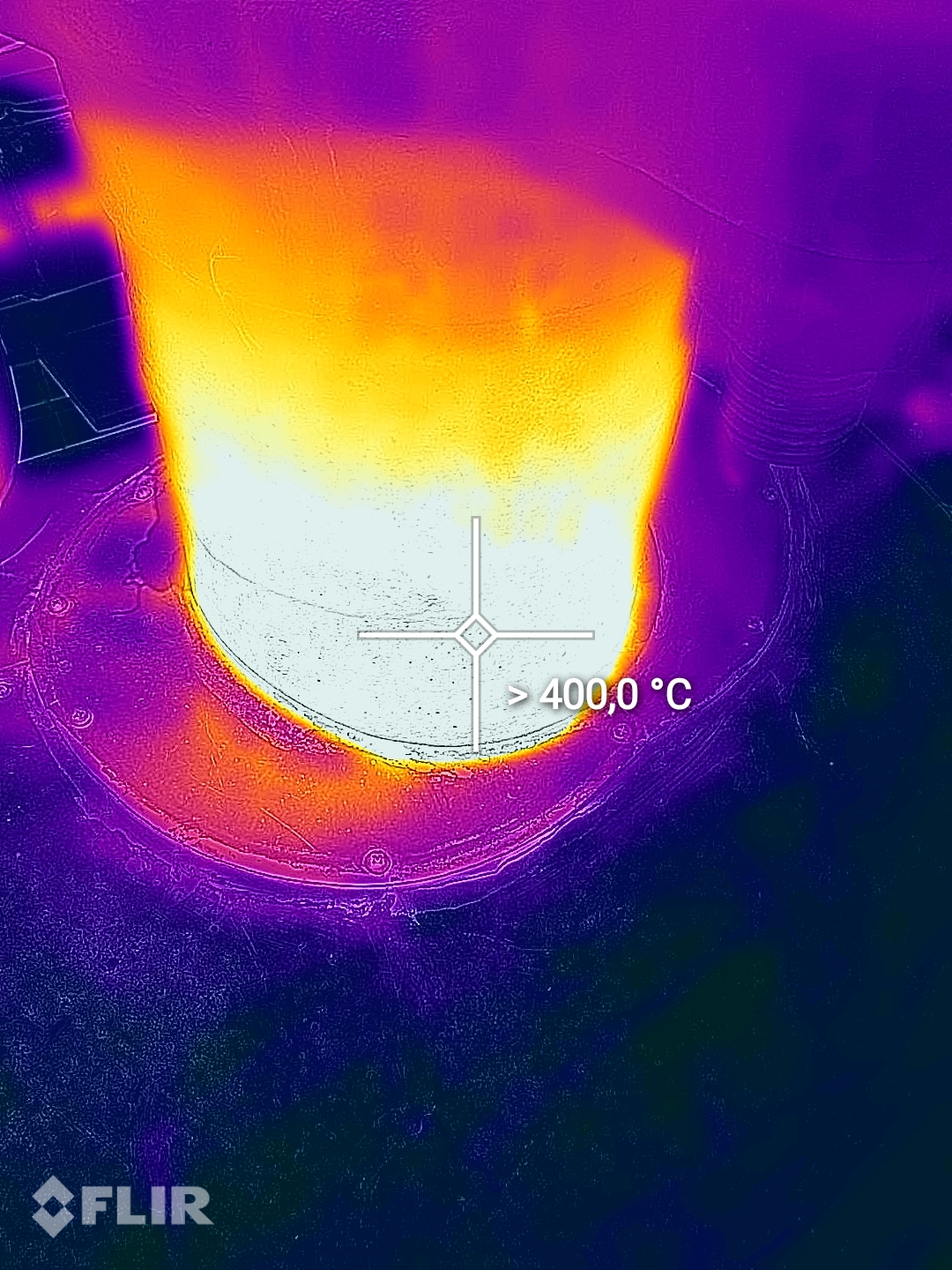
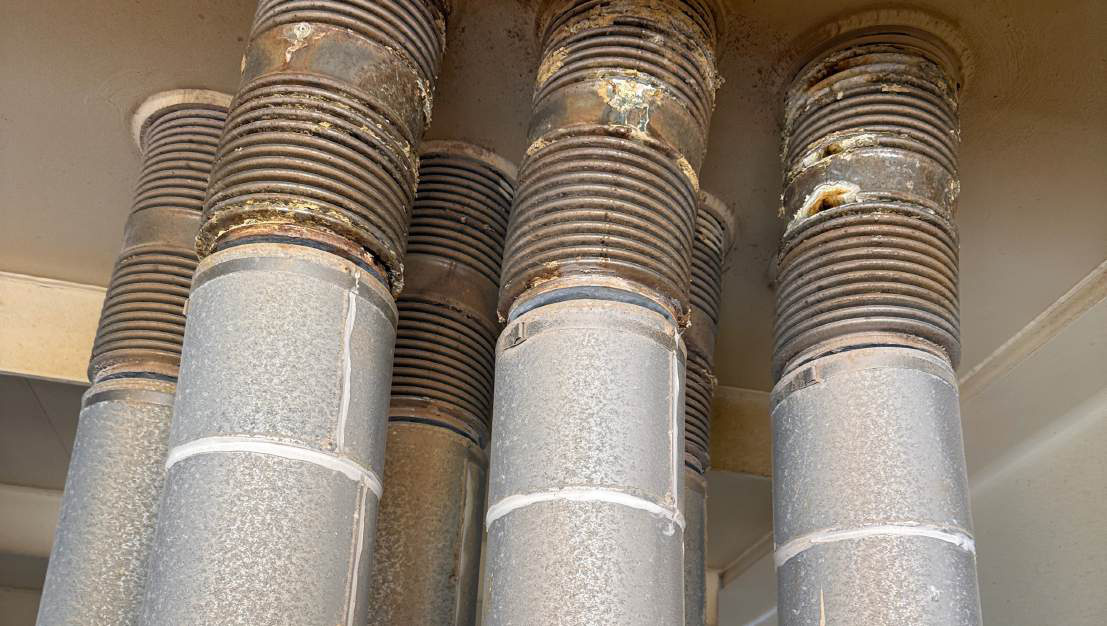
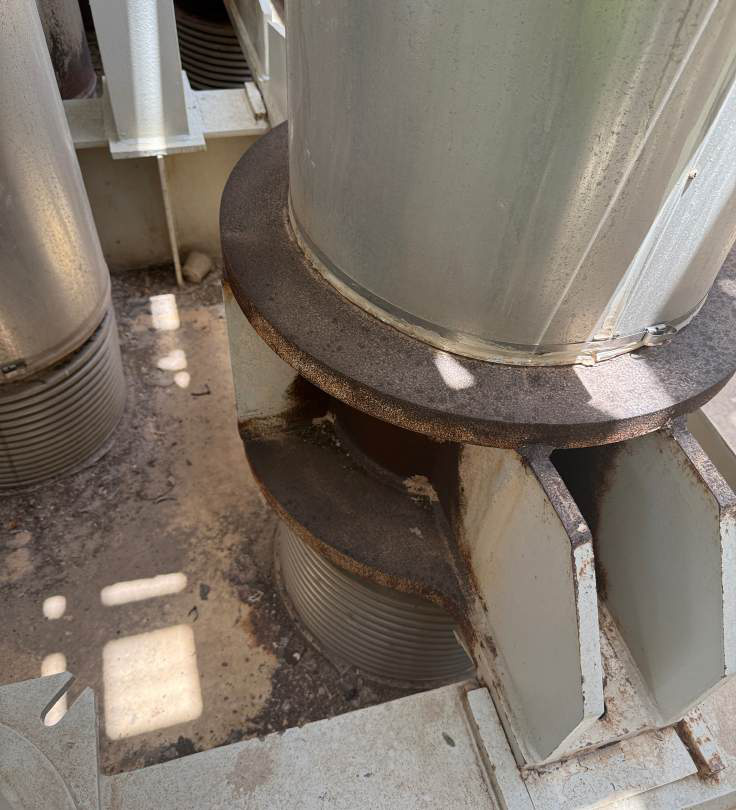
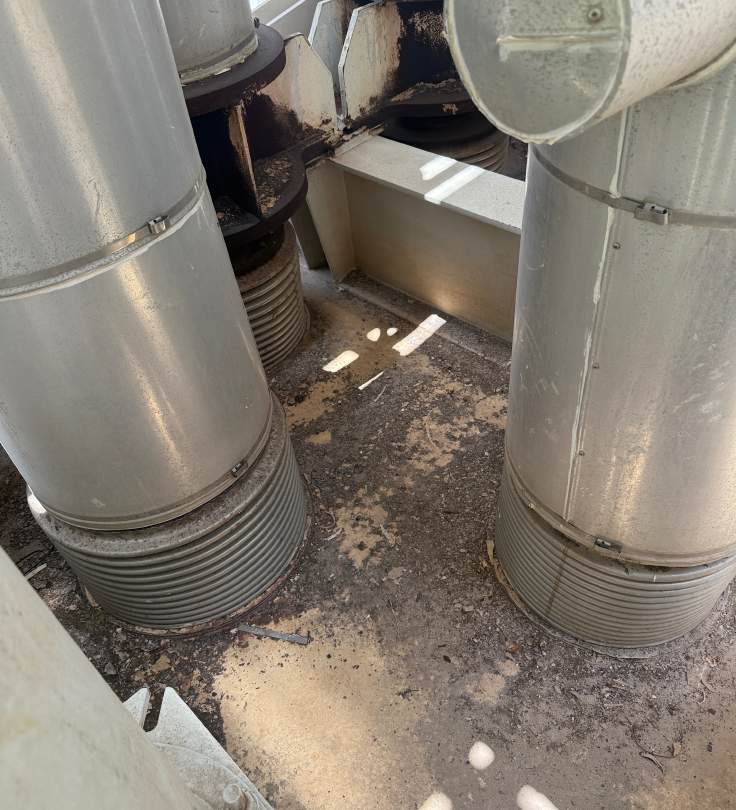
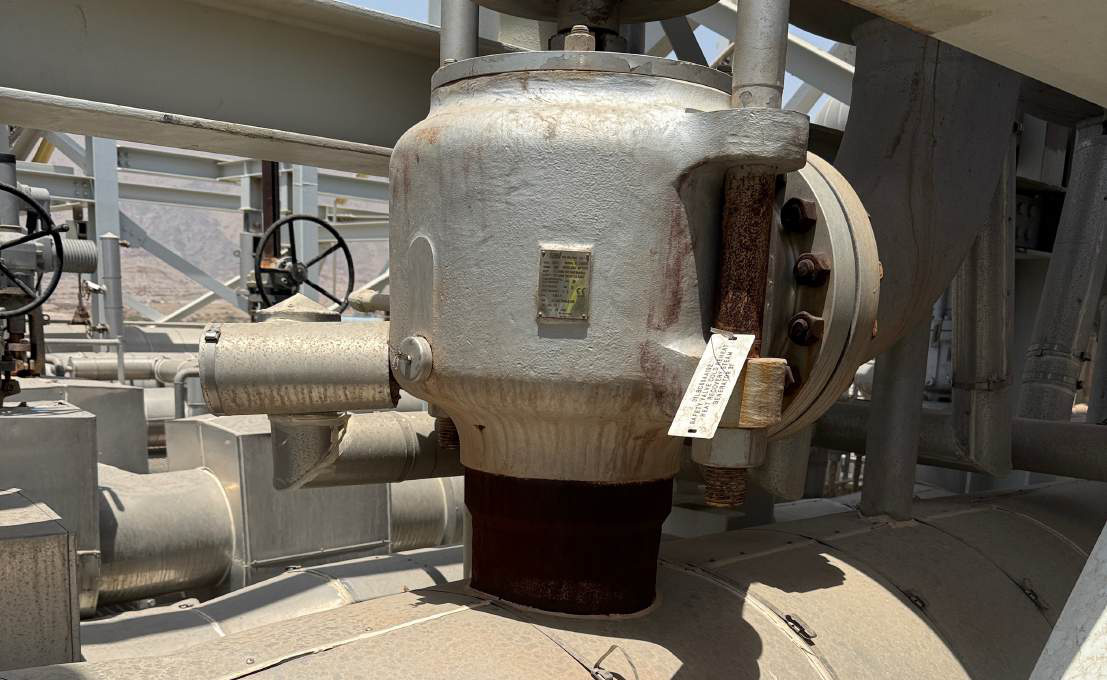
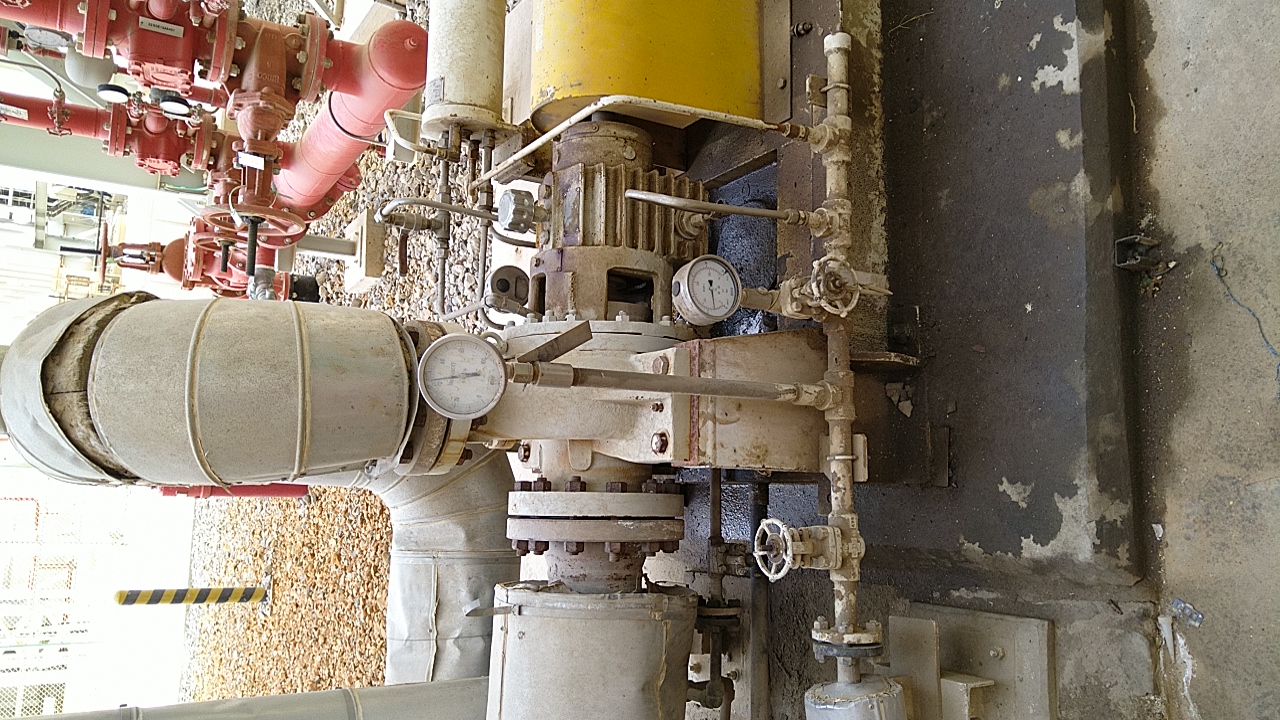
On-site assessment (1–2 June 2025) identified 1,022 uninsulated thermal components: 150 HP support flanges and 150 corrugated expansion joints operating at +460 °C, plus 722 additional elements at +90 to +450 °C across the IP, LP and feedwater lines.
Ambient conditions on site: 27.7 °C, 3.1 m/s wind. Calculation per ISO 12241, VDI 2055 and ASHRAE Fundamentals, aligned with IPCC 2006 Vol. 2 and GHG Protocol for project-level accounting.


Priority zone: 300 HP elements at +460 °C (delivering 71% of the total savings). Balance: valves, bonnets, steam traps, flexible joints, flanges and feedwater-pump interfaces across IP / LP / HP lines.
Drag the slider to compare the exposed support flange and corrugated expansion joint with the Inzonex modular upgrade. Click the orange markers for per-element heat loss, fuel savings and CO₂ avoided. Toggle Thermal Vision to see the 460 °C surface signature.
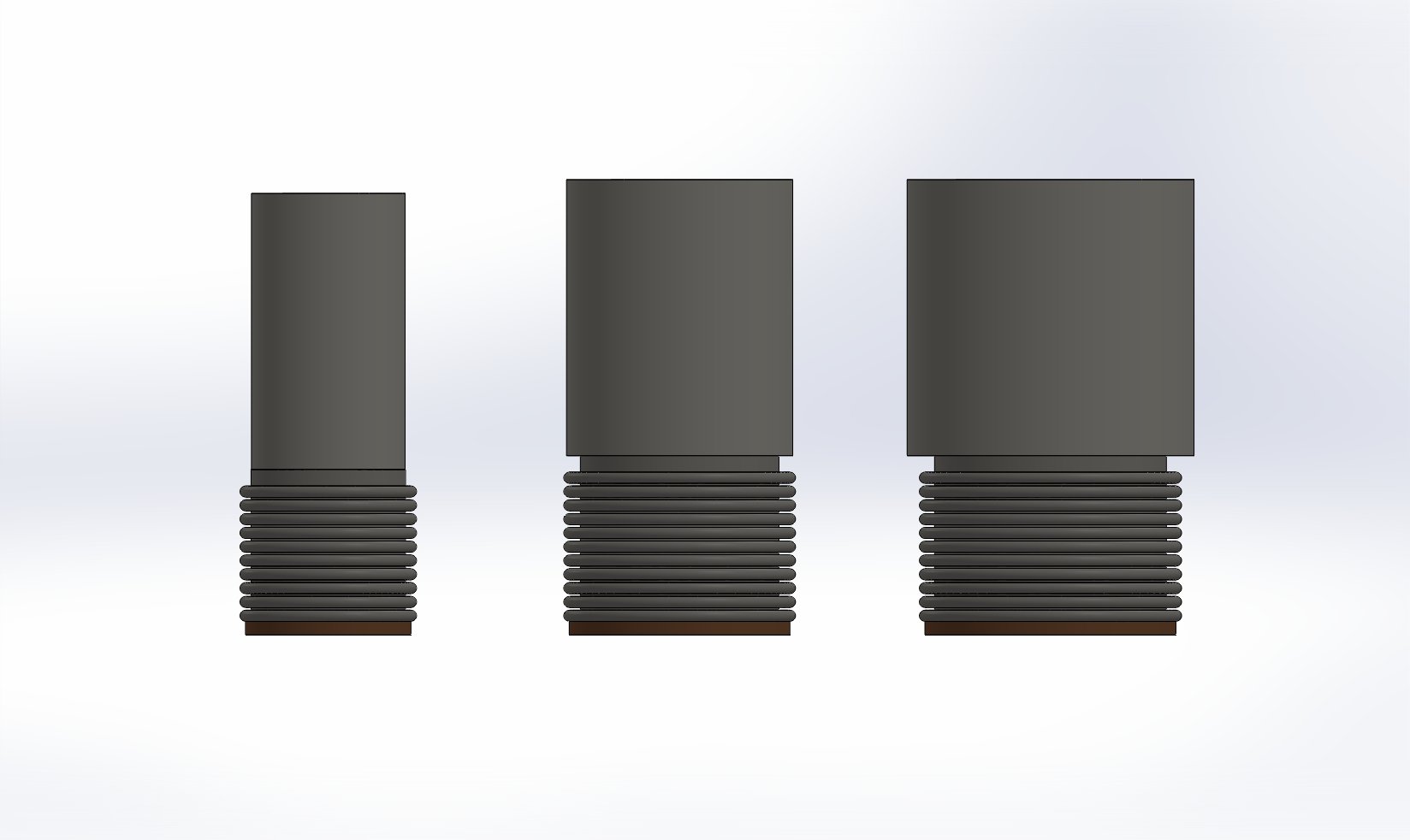
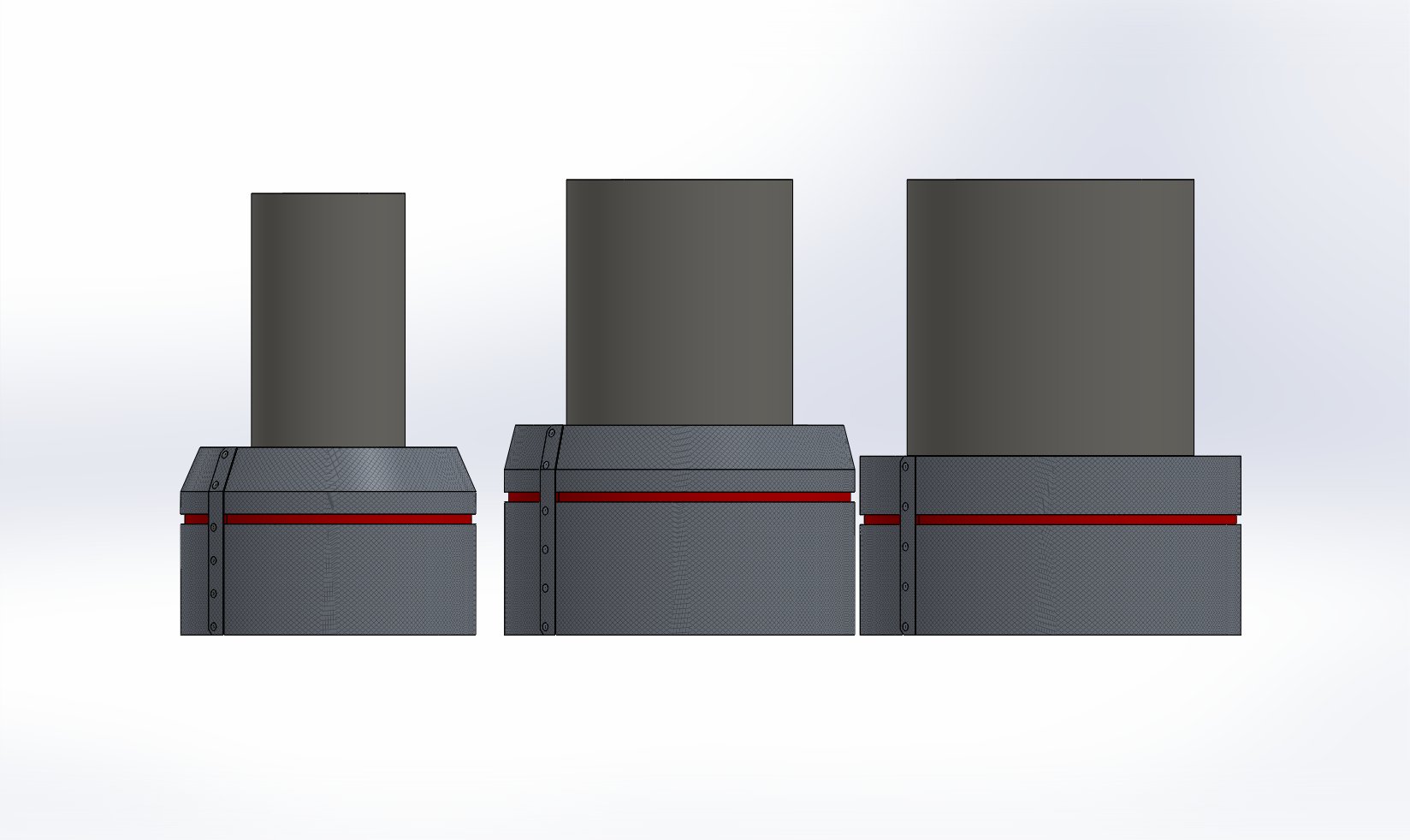
Front-view schematic of the corrugated expansion joint under the HP support flange — uninsulated baseline vs. Inzonex two-half clamshell with Paroc Lamella Mat 100 mm core.
Top 16 line items of the ISO 12241 heat-loss register. Two HP elements at +460 °C carry 71% of the total annual value.
| Zone | Component | Qty | Temp | MWh / yr | Savings (USD) |
|---|---|---|---|---|---|
| HP · 460°C | Support Flange (+460°C) | 150 | 460°C | 18,326 | $274,887 |
| HP · 460°C | Corrugated Expansion Joint under Flange | 150 | 460°C | 19,989 | $299,831 |
| HP | Safety Valve (+450°C) | 20 | 450°C | 3,982 | $59,728 |
| HP | Gate Valve (+450°C) | 5 | 450°C | 1,288 | $19,327 |
| HP | Flexible Joints — HP Lines Type 1 (+420°C) | 30 | 420°C | 891 | $13,369 |
| HP | Flexible Joints — HP Lines Type 2 (+420°C) | 25 | 420°C | 783 | $11,747 |
| IP | Disc-type Steam Trap (+276°C) | 60 | 276°C | 380 | $5,702 |
| IP | Flange (+230°C) | 10 | 230°C | 68 | $1,015 |
| IP | Valves (+190-205°C) · 9 lines | 160 | 205°C | 964 | $14,473 |
| IP | Safety Valve (+190°C) | 10 | 190°C | 206 | $3,094 |
| LP | Corrugated Expansion Joint (+180°C) | 165 | 180°C | 4,466 | $66,994 |
| LP | Corr. Exp. Joint — smaller (+180°C) | 60 | 180°C | 1,113 | $16,694 |
| LP | Flexible Joint (+200°C) | 100 | 200°C | 1,455 | $21,820 |
| LP | Flexible Joint (+120°C) | 25 | 120°C | 158 | $2,371 |
| Feedwater | Pump (+120°C) | 6 | 120°C | 134 | $2,015 |
| Flanges/Valves · misc | Flanges & valves (+90-155°C) | 66 | 155°C | 133 | $1,998 |
| Total (all 1,022 components incl. balance of plant) | 1,022 | — | 54,152 | $812,287 | |
HRSG pipe losses are steam-side — they subtract directly from enthalpy available to the steam turbine. Following the same methodology used on F3 (2025 calendar-year reference, net plant heat rate 6,165 kJ/kWh LHV), recovered steam heat converts to electrical output via the ST at a conservative ratio of ≥ 1:3 (thermal:electrical, Rankine).
PPA Heat Rate guarantee. Sur IPP operates under a long-term tolling PPA with OPWP. Heat Rate is a contracted performance guarantee — drift above the baseline exposes the plant to capacity-charge deductions and fuel-variance penalties. Every kJ/kWh of headroom is a direct hedge against those deductions.
Merit-order dispatch. In the Oman grid, OETC ranks IPPs by short-run marginal cost. A lower HR = lower SRMC = higher dispatch rank = more operating hours & higher capacity-payment realization.
Benchmark context. In the CCGT industry, a 10 kJ/kWh improvement is a notable, press-release-worthy win; 20 kJ/kWh is a board-level KPI line item; 30+ kJ/kWh historically justifies multi-million-dollar upgrade campaigns (condenser overhaul, inlet cooling, gas-path upgrade).
Cost parity. Inzonex delivers the same HR improvement envelope as a condenser-cleaning programme or a mid-tier HRSG performance upgrade — at < 10% of the capital cost and with 0.6-year payback vs 3-8 years for the alternatives.
| CCGT HR-Improvement Measure | ΔHR (kJ/kWh) | Typical Capex | Payback |
|---|---|---|---|
| Condenser cleaning / tube replacement | 10–20 | $500K–$2M | 1–3 yr |
| HRSG performance upgrade (OEM) | 10–20 | $5M–$15M | 4–8 yr |
| Inlet air cooling (fogging / chiller) | 40–80 | $8M–$20M | 3–6 yr |
| Advanced gas-path upgrade | 30–60 | $30M–$60M | 5–10 yr |
| Inzonex HRSG insulation (this proposal) | 10–30 | $449,000 | 0.6 yr |
Benchmark ranges from public CCGT performance-upgrade case studies (GE, Siemens, Mitsubishi Power, EPRI). Inzonex range subject to verification against Sur 2025 monthly net-export and fuel-consumption data.
Inzonex modular insulation for flanges and expansion joints comes as two symmetric half-shells that close around the hot element like a clamshell. Snap-fit fasteners along the vertical seams allow installation and removal in seconds — without tools, without disassembly, without process shutdown.
For the 460 °C HP zone, panels use a silica-fabric hot side with vermiculite coating and a rockwool core. External skin is silicone-coated fabric, fully waterproof and chemically inert. AISI 316 stainless steel snaps and retainers.
Two halves close around the element. Tool-free assembly. 6× faster than wire-tied blankets.
Outer shell stays intact · insulation core replaced when needed · lifecycle ~15 years.
UK Patent GB2508992.1 · modular segmented architecture with snap-fastening system.
Surface ≤55 °C per our FLIR verification. Operator burn-risk to zero.
Priority 300 HP elements at +460 °C plus high-temperature valves. Covered without shutdown. ~80% of project value.
8–12 weeksThermal measurements of all remaining uninsulated / poorly insulated surfaces during annual shutdown (ST & turbine zones included).
1 weekComplete Inzonex installation across the facility. No critical component left exposed. ESG reporting package & post-install FLIR verification.
8–12 weeksStart saving $812,287 annually · payback in ~7 months · avoid 9,910 t CO₂ per year.
Approve Proposal →